
- SKU:
- G25SCHIL
- Weight:
- 0.1891 troy oz.
- Fineness:
- .900
- Diameter:
- 21mm
- Thickness:
- 1.3mm
- Gold Content:
- 0.1702 troy oz.
Austrian 25 Schilling Gold Coin
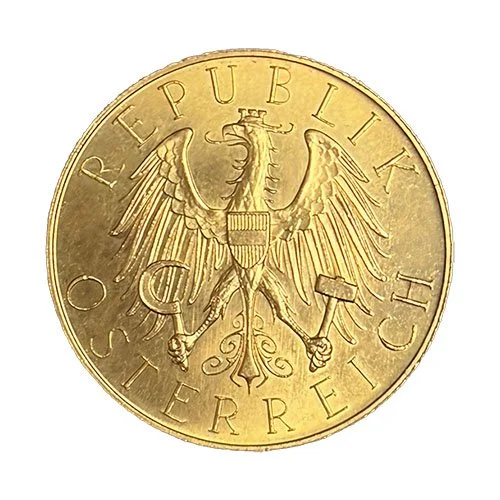
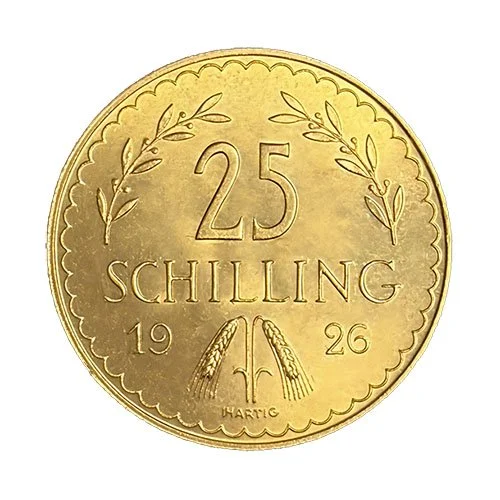
The Austria Gold 25 Schilling Coin was minted between 1926 and 1931 during the First Austrian Republic, representing a transitional period in Austria’s monetary history. Struck in .900 fine gold, each coin contains 0.1702 troy ounces of pure gold, making it a compact yet historically significant piece. These coins were issued as part of Austria’s effort to stabilize its economy following World War I and the dissolution of the Austro-Hungarian Empire. The obverse typically features the Austrian coat of arms, symbolizing national sovereignty, while the reverse displays the denomination “25 SCHILLING” along with decorative elements that reflect the artistic style of the era. Today, the 25 Schilling Gold Coin is admired for its elegant design and historical importance, offering collectors a tangible link to Austria’s interwar period and its numismatic heritage.
Key Features:
- Purity: Struck in .900 fine gold, ensuring durability while preserving its intrinsic value.
- Design: The obverse features the Austrian coat of arms, a symbol of national pride and identity during the First Republic. The reverse displays the denomination “25 SCHILLING” surrounded by a decorative wreath motif characteristic of early 20th-century Austrian design.
- Denomination: The 25 Schilling represents Austria’s economic recovery and modernization efforts during the interwar years, preceding later commemorative and bullion issues such as the Gold Philharmonic.
- Collectability: Minted between 1926 and 1931, these coins reflect Austria’s transition from imperial rule to republican governance. Their issuance marked a period of economic stabilization and national identity, making them historically important beyond their monetary role.
The Austrian 25 Schilling Gold Coin combines historical depth with refined design. Its rarity and connection to Austria’s interwar era make it a distinguished addition to any collection of classic European gold coinage.